

-
+1-284-545-5893

Let Loose Yacht Charter Brokers Blog
- Home
- Blog listing
- The Musical Bridge
From Denmark to America: The Musical Bridge That Shaped the U.S. Virgin Islands
- access_time12 June, 2025
- account_circleadmin
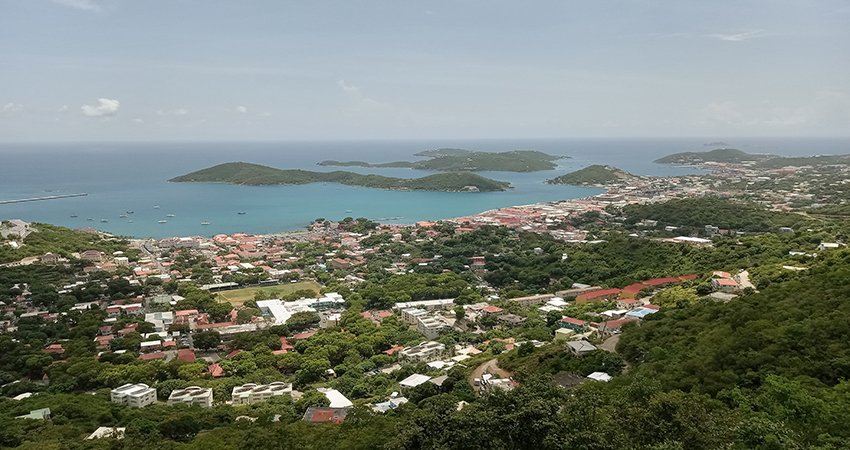
The story of the U.S. Virgin Islands is one of cultural transformation, political shifts, and the power of music to bridge worlds. Before they became a U.S. territory, the islands we now know as St. Thomas, St. John, and St. Croix were known as the Danish West Indies—a colonial holding of Denmark since 1672. That chapter ended on March 31, 1917, when the United States purchased the islands for $25 million, just days before entering World War I. The aim? To prevent German forces from taking control of the strategic Caribbean outpost.
With this transfer came a symbolic shift. The islands were renamed the Virgin Islands of the United States, but the process of integrating the territory into the American political and social framework took decades. One of the most significant oversights during the transfer was the omission of U.S. citizenship for the islanders. As historian Mark Clague notes, it wasn’t until 1927 that residents were officially granted citizenship. The shift from military to civilian governance followed in 1931, and many constitutional protections finally came into effect through the Organic Act of 1936.
What's in a Name?
Even the name “Virgin Islands” can be confusing. Today, “British Virgin Islands” (BVI) is used to distinguish the UK territory from its American counterpart, the “United States Virgin Islands” (USVI). Yet, as Dr. Quincy F. Lettsome notes, the archipelago as a whole has always been known as the Virgin Islands. The divisions we recognize today are political, not geographic.
Alton Augustus Adams Sr.: A Cultural Bridge Through Music
Amid these changes, one local figure played a remarkable role in shaping the territory’s evolving identity—Alton Augustus Adams Sr., a native of St. Thomas. A respected bandleader and composer, Adams became a key figure in navigating the cultural transition between Danish colonial rule and American governance.
Historian Mark Clague, in his biographical study Instruments of Identity: Alton Augustus Adams Sr., the Navy Band of the Virgin Islands, and the Sound of Social Change, describes Adams as “a cultural interpreter, a mediator poised between the United States and the Virgin Islands.” Within a month of the U.S. acquisition, Adams and his band were inducted into the U.S. Navy. Their purpose? To serve as a "bridge of communication" between the predominantly white American naval administration and the majority Black population of the islands.
Music as Cultural Diplomacy
Adams’ music carried more than melody—it carried meaning. His compositions reflected Virgin Islands identity while also appealing to broader audiences abroad. Clague refers to this dual impact using the “geometry of Signifyin(g),” a theory rooted in African American rhetorical traditions where the audience’s interpretation plays a central role in the cultural significance of the performance.
For locals, Adams was one of their own—a proud Virgin Islander whose music celebrated their shared history. For audiences overseas, his compositions met the high standards of classical music, infused with Caribbean flair. He composed The Virgin Islands March, which would become the territory’s official anthem, and he sold the rights, turning his intangible inspiration into a tangible cultural legacy.
In Adams’ own words, captured in Clague’s work and preserved in oral histories, he hoped “that an awareness of distinctiveness could be revived through music.” And indeed, his music not only preserved a cultural memory but helped shape a new identity for the Virgin Islands within the American context.
From colonial possession to American territory, the history of the U.S. Virgin Islands is complex and layered. But in the story of Alton Augustus Adams Sr., we see how one man—and one medium—can become a powerful tool of unity and transformation. Through music, Adams didn’t just entertain; he educated, united, and inspired a generation navigating the tides of change.
